





















Deep in heart of Sarawak Borneo’s rainforests, a rare culinary treasure awaits those who are lucky to taste it.
Silky, buttery, and indulgent, this seasonal fruit is only available a few months each year. It remains largely unknown on the global food scene. Packed with potent antioxidants, it has nourished the people of Borneo for centuries.
Beyond its luscious flavour and nutraceutical properties, the Sibu olive bears enduring tales of resilience and survival. The shifting balance between culture and nature in one of the world’s most challenging terrains. I travelled to the forest edge, piqued by the mystery of this sought-after fruit.
Philip Yong, the co-founder of Borneo Adventure connected me to Joshua Boon, a retired agricultural researcher. Joshua’s passion for the Borneo’s biodiversity has long kept him tethered to the land he loves.
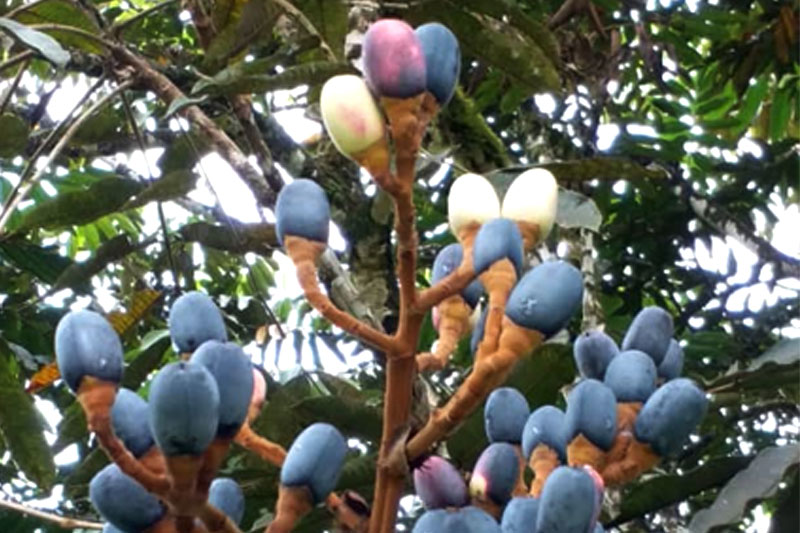
The Sibu olive wasn’t in season, but I was keen to explore his farm. Discover what it takes to cultivate this delicate crop in this wild, remote Borneo landscape.
Locals call it Dabai, Sarawak or Borneo olive, or kembayau in Sabah and Brunei. Scientifically known as Canarium odontophyllum, it’s a species within the Burseraceae family.
Joshua had arranged to meet at a food centre at the 10th Mile Bazaar. As we navigated the morning traffic to meet him, the Sibu olive’s smooth, creamy texture flashed in my mind.
Its richness, like a perfectly ripened avocado, captured the terroir of Borneo’s rainforests. At 140 million years old, the world’s second oldest rainforests, stand as crucial guardians of biodiversity and global climate.
From Cooking to Culinary Delights and Community
As I arrived at the food centre, the memory of the fruit quickly faded. The aroma of sizzling stir-fries and fragrant broths enveloped my senses. Vendors’ hands moved in sync—chopping, stirring, and plating.
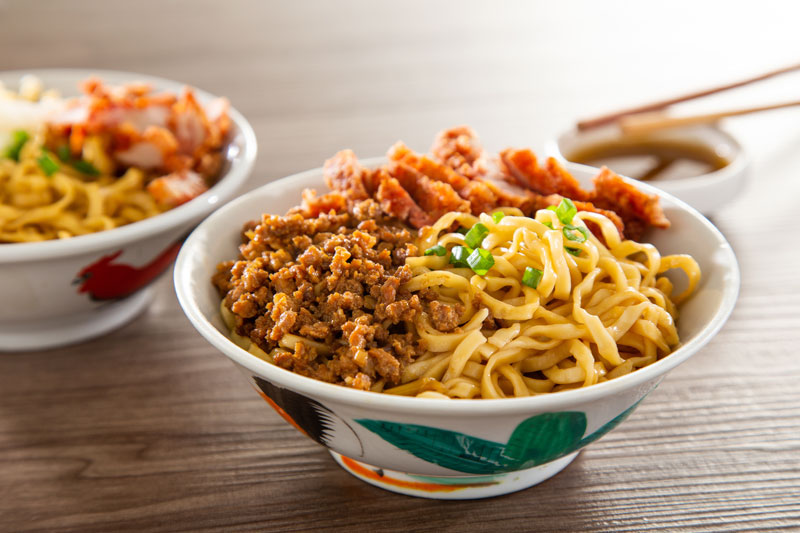
Like a choreographed dance, they effortlessly craft local favourites including Sarawak laksa, Kolo mee, and chicken rice. Inside the centre, a buffet of freshly cooked dishes presented a feast of choices for every craving.
Related: Savour Borneo’s Last Frontier with Magical Langkawi
Along the sidewalk, vendors hawked colorful cakes, snacks and fresh jungle produce, while a group of men bantered about politics, pausing only to slurp their noodles. It was a bustling, convivial place, where authentic local dishes are savoured, surrounded by the comforting hum of community life.
Amidst the buzz, I spotted Joshua sitting by the sidewalk table, sipping coffee. Lean and tanned, with quiet dignity, Joshua’s demeanor reflected a life lived in tune with nature.
Journeying into the Heart of Borneo
After a quick introduction, we climbed into his trusty 40-year-old 4WD workhorse, and sped away from the lively bazaar. We passed Bidayuh and Malay villages nestled sporadically among the trees.
Their canopies rippling under the morning sun like a sea of broccoli. As we neared his farm, the paved road narrowed, and gave way to a winding dirt path that seemed to disappear into the forest.
Just days before, torrential downpours ravaged sections of the path leaving behind washed-out ruts and debris. Each attempt to push forward was a calculated gamble as the tires sank deeper into the mud. There was no room to maneuver for oncoming traffic, and reversing wasn’t a desirable option.
With every twist and turn, we glimpsed a wilder, untouched side of Borneo that appeared to resist civilization. A reminder of the resilience needed to thrive here.
As British Naturalist, Alfred Russel Wallace depicted Borneo, a land of “dead level, dense forest, and perfect swamp”. A wild oasis of biodiversity, teeming with nature’s secrets.
Sarawak: Batang Ai Experience (Borneo Adventure)
Apothecary, Food and Culture in a Changing World
For generations, Borneo’s rainforests have been regarded as a medicinal Pandora’s box, a food source, and a wellspring of wisdom for Indigenous communities.
Among its many secrets is the wild Sibu olive, revered for its robust antioxidants, dietary fibre, and bioactive compounds. Nutraceutical components that can help reduce cholesterol, prevent diabetes, and lower the risk of heart disease.
“The forest feeds us with wild animals, vegetables, and fruits. It heals us with plants, and protects us by providing clean air and shelter. In return, we protect the forest. It’s a relationship of mutual respect,” Jonathan from Nanga Sumpa longhouse agreed, when asked.
“Preserving the longhouse culture is crucial in the fight against climate change. If the longhouse disappears, so does the knowledge of its traditions,” concurred Jonathan whose family has lived in Iban longhouses for generations.
Bracing for the Wild
Both Jonathan and Joshua share a deep, intrinsic bond and respect for the land, despite being over 300 km apart. Joshua’s farm is perched on the lush, verdant slopes of Padawan, about an hour’s drive from Kuching, Sarawak’s vibrant capital.
Nearby, lies the Semenggoh Nature Reserve for semi-wild orangutans viewing and a fascinating pitcher plant garden. The area is also home to a thriving Bidayuh community.
The moment we arrived, the rainforest enveloped us—hot, humid, and alive with the hum of insects. Barely had I taken a few steps, sweat soaked through my shirt, with mosquitos incessantly swarming around.
Joshua, however, seemed unfazed. With practiced ease, he sprayed on insect repellent and swapped shoes for rubber boots. Then, donned his wide-brimmed hat—towel tucked inside to absorb sweat and combat heat—and was off.
Machete in hand, he led the way through the muddy terrain. “The grass grows at a fast rate here,” he said, his machete slicing through the long grass, clearing a path. “You blink, and it’s waist-high.”
This was life in tropical Borneo. A constant battle against the jungle’s relentless pace—and now, the unpredictable fury of changing weather patterns.
Joshua explained that parts of the terrain were tarped to control weeds, reduce soil erosion, and for moisture retention. Droughts had killed his crops, especially the Borneo avocado or Engkalak he had tended for years.
Challenges to Contend
“The soil here isn’t as fertile as it looks,” he said, gesturing to the soil beneath our feet. “Heavy rains leach the nutrients, leaving it acidic. We have to fertilize constantly.”
With a hoe, he dug into the soil, revealing rich, red earth. “Without proper care,” he continued, “the Dabai trees won’t bear fruit. Everything here demands attention.”

The constant grafting, fertilizing, and care required to cultivate fruits like the Sibu olive in such a challenging environment speaks of his dedication. His small farm also grapples with pest, harvesting and logistical hurdles.
As I stepped on tree roots to steady myself in the mud, a sharp gust howled through, sending tin cans and tires swinging wildly from the tall trees. Their hollow creaks echoed eerily, like ghostly whispers carried by the wind.
Joshua chuckled and said, “They are set up to deter pests like squirrels, birds, and to keep intruders at bay”. This simple contraption is surprisingly effective.
Sibu olive is typically harvested between December through January. Its short shelf life, tall tree height, and the remote location complicate both harvesting and the supply chain, he shared. Occasionally, a second harvest happens between July and August, depending on the weather, but it’s never guaranteed.
The Sibu Olive’s Mysterious Origin
Joshua believes the fruit’s journey began in southeastern China. “In all my years of research, I’ve never found a Dabai tree in the primary forest, only in secondary forests.”
He theorized that the Foochew settlers, likely brought the fruit with them when they migrated to Sarawak’s Rejang Basin (Sibu division) in the late 1800s. Over time, it adapted to Borneo’s tropical environment.
Its name stems from its superficial resemblance to the real olive (Olea europaea) and its connection to the Sibu division. Botanically unrelated, the fruit is slightly larger than a Greek Kalamata olive, an Olea europaea variety.
Once a humble, inexpensive fruit, the Sibu olive has since evolved into a prized delicacy. Its scarcity and antioxidant properties now attracts chefs and health-conscious eaters alike.
From Preparation to Flavour and Versatility
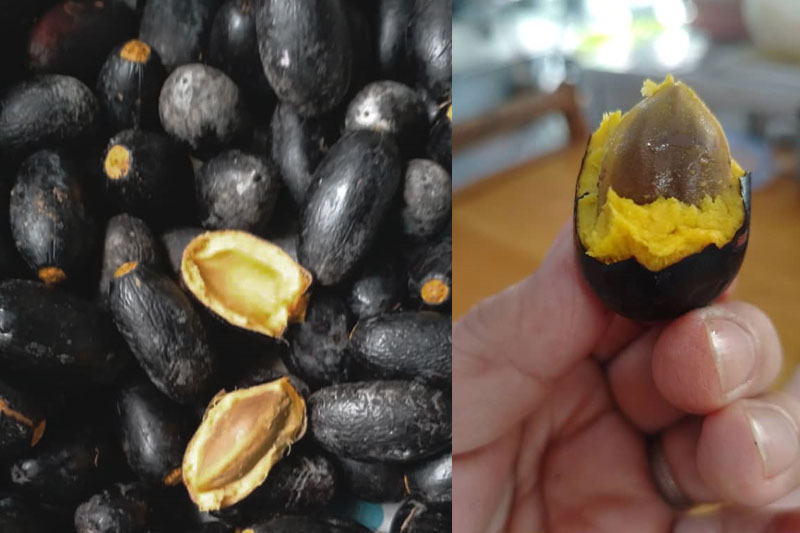
Decades later, I still recall my first taste and the preparation ritual. Wash the fruits, then immersed in hot water for about 15 minutes to soften their firm and astringent flesh. Enjoy as is, with or without skin, or add a sprinkle of salt, sugar, or soy sauce for extra flavour.
The taste strikes a balance between avocado and olive, with subtle nutty and cheesy notes. The custard-like flesh is a versatile ingredient, perfect for integrating into both sweet and savoury dishes.
Given its highly perishable, it’s often made into frozen pulp, or pickled, to retain its vibrant flavours. Adding the product to fried rice adds a notably rich and slightly tangy flavour to the dish. Dabai fried rice is a beloved Sarawak culinary gem.
Indigenous Crops’ Potential
Though Dabai is a local delicacy, its nutraceutical promise is drawing global attention. Joshua remains cautious about large-scale farming, given the region’s unpredictable climate.
A 2022 study highlighted the importance of indigenous crops like the Dabai and Bario rice. Beyond their superior nutritional value, they could offer a promise of a more resilient food system for locals.
Malaysia’s Intellectual Property Corporation (MyIPO) had granted the fruit a Geographical Indication (GI), protecting its authenticity, raising demand and awareness—especially in urban markets.
The Magic of Sarawak, Malaysia Borneo
While I didn’t get to retaste the Sibu olive during my visit, the magic of Borneo was undeniable. From Joshua’s unwavering dedication to the land, to the rugged charm of the farm, every moment reaffirmed the deep connection between the people and the land.
The Sibu olive is more than a fruit. It’s a symbol of Borneo’s resilience, the people’s enduring spirit, and the land that nurtures them.
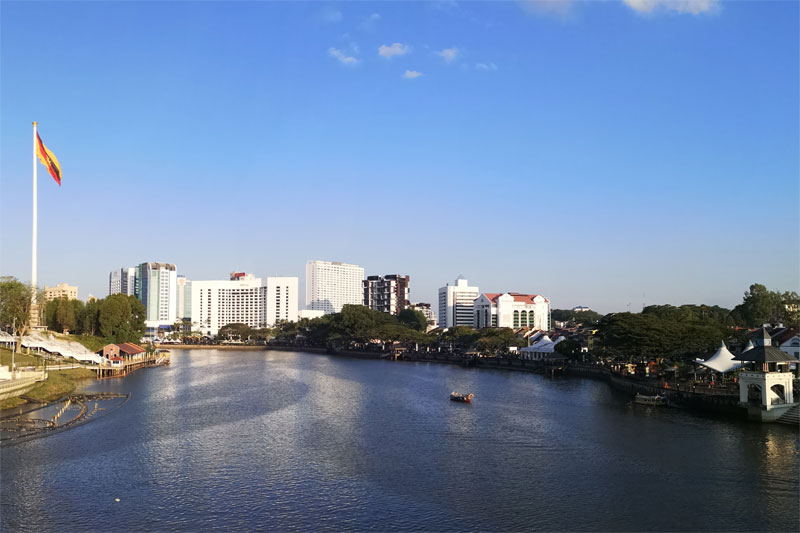
Kuching, named a UNESCO City of Gastronomy in 2021, is a culinary hub that celebrates indigenous foods and sustainable farming. With growing interest in crops like the Sibu olive, now is the perfect time to explore Borneo’s hidden culinary delights.
Related: Malaysia: From Nasi Lemak to Borneo’s Wild Cuisine
In 2024, Kuching’s commitment to clean living earned the city a spot as the 11th cleanest city globally for air quality. This post-colonial city is a gateway to Borneo’s wild beauty, where nature, culture, and modernity seamlessly converge.
Sarawak is one of Malaysia’s two states located on the island of Borneo. What better time to visit than in 2026, when the region celebrates “Visit Malaysia Year”?