



































Is Venice sinking? The city rose from a forest of timber piles, and has captivated travellers for centuries. Will it survive the challenges of the 21st century?
It is a city like no other place on earth. My first visit to Venice was more than three decades ago. I never wondered about its survival, much less its fragility and ruin. Returning recently, I found myself asking a different question: how long will Venice stay above water?
The moment I stepped off the train at Venezia Santa Lucia station, memories surged back. It was a rainy weekday during the shoulder season. I had expected an unhurried terminal.
Instead, I arrived amid a mid-morning frenzy. Travellers wheeled suitcases through the crowd like an endless tide. Long queues stretched from the food outlets.
A short walk away, the vaporetto (water bus) line brought another wave of queues—first for tickets, then for boarding. When my turn to board finally arrived, the vaporetto to Piazza San Marco (St. Mark’s Square) was already crowded.
When Rain Reveals Beauty
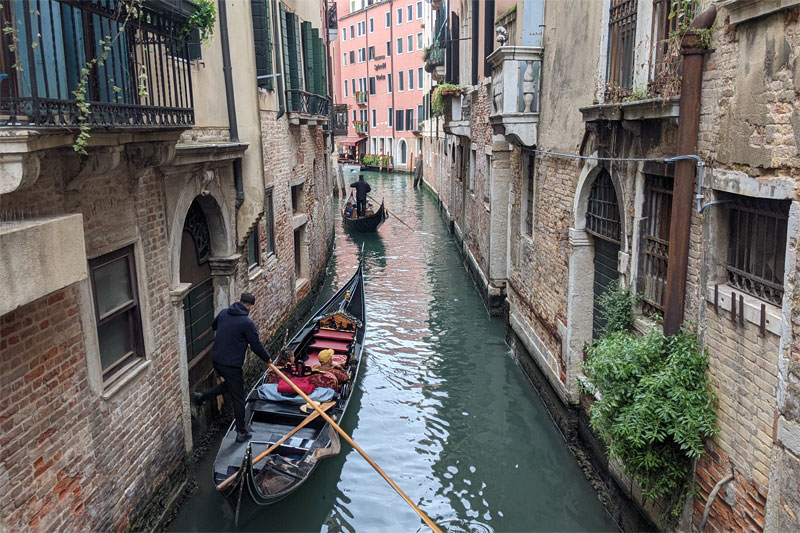
With every seat taken, I squeezed into a cramped space on the deck. As the water bus left the dock, spectacular scenery along the Grand Canal replaced my discomfort.
Water-taxis and gondolas swayed in rhythm with the driving rain. The downpour couldn’t diminish the city’s timeless allure. Palazzi (noble palaces), storied landmarks rose majestically along the water’s edge. Venetian Gothic, Byzantine and Renaissance styles blended seamlessly, carving out the city’s iconic silhouette against the grey skies.
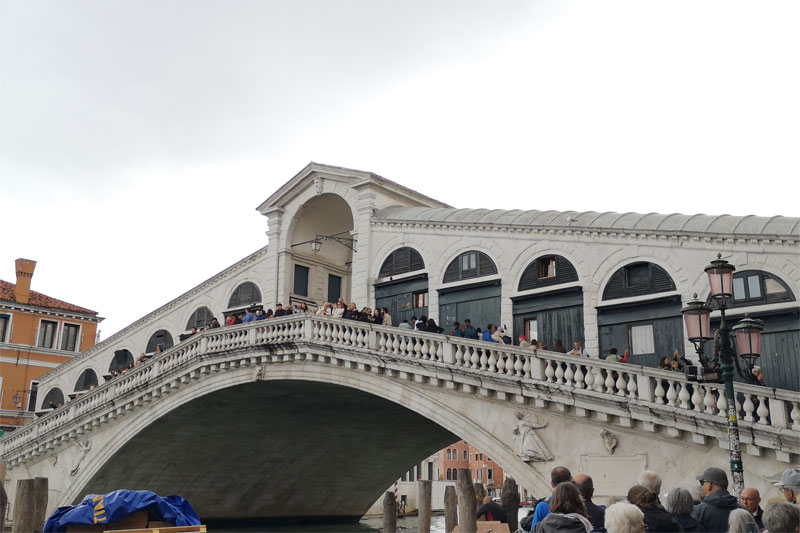
Stone bridges arched over twisting canals, linking masegni (paving stone) footpaths through the city. Their ancient stone only gleamed brighter as we glided along the canal.
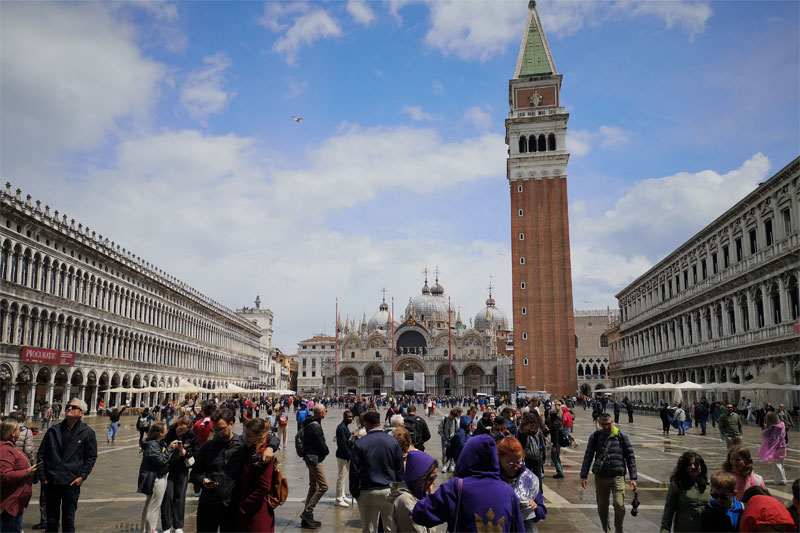
Basilica di San Marco (St. Mark’s Basilica), its surrounding square, and the Rialto Bridge continue to inspire awe, though I had to navigate the inevitable crowds.
Their heritage speaks of centuries of East-West trade and cultural exchange that have shaped Venice’s fortune.
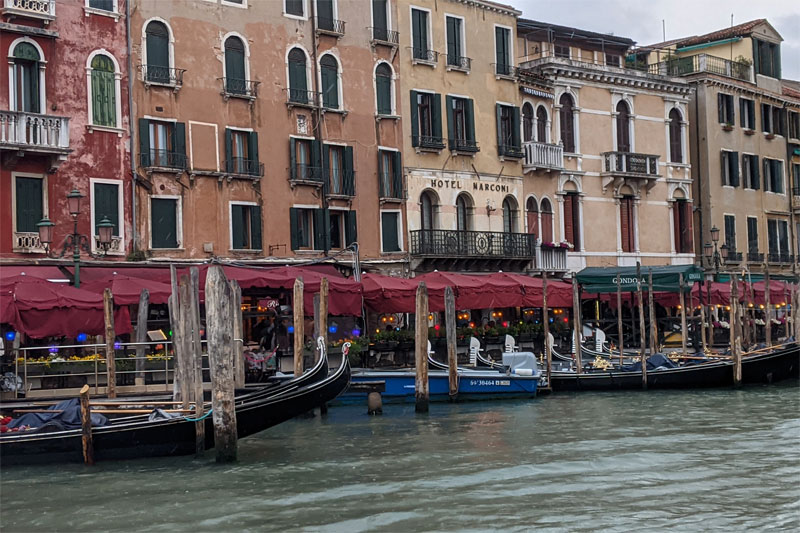
At the height of its maritime reign, the city was a global magnet for profit-seekers, and affluent elites craving prestige.
Today, travellers come for its living history, timeless art, and legendary cuisine. I first came for its lavish and exotic architecture. Yet I couldn’t help but wonder how much longer they would stand.
Overtourism Threatens Its Future
In 2025, 34.5 million visitors descended on the city, dwarfing the roughly 50,000 residents living in the historic centre. This meant 690 visitors per resident annually, placing significant strain on its crumbling infrastructure, housing and local community.
In an EL PAÍS news article, “Venice has had enough: Local elections will decide the city’s direction on tourism,” Íñigo Domínguez wrote,
“Signs of exhaustion are everywhere: Venetians on their way to work unable to board the vaporetto because it’s already full.”
Day trippers and cruise passengers dominate daily visitor arrivals. In 2024, Venice introduced a day tripper’s access fee on peak days. The €10 access fee to the historic centre, or €5 when paid in advance did little to ease the overcrowding.
Venice’s mayor, Simone Venturini, recently proposed a dynamic, surge-pricing system. If approved, day trippers could pay up to €50 on the busiest day.
The world wants to experience Venice, but overtourism may threaten the character and charm drawing travellers to this living museum.
Its appeal lies in a story that started long before visitors arrived.
Survival of the Upside-Down Forest
Venice began in the early 5th century as a refuge for displaced people from Roman mainland cities escaping barbarian invasions. The marshy lagoon of the Adriatic Sea served as a natural shield against invaders.
To create stable foundations, Battipali (pile hitters) drove millions of short wooden pilings into the marshy lagoon bed. As the BBC Future observed, locals have a fitting metaphor for the city’s distinctive character: “an upside-down forest.”
Whether by design or chance, oxygen-free clay and mud beneath the waters have preserved the tightly packed timber. Over time, mineral-rich waters petrified the buried logs solidifying Venice’s foundations –sustaining it for over 1,600 years.
Nicola Macchioni, research director at the institute for bioeconomy at Italy’s National Council for Research told BBC Future. “It’s not known for how many more hundreds of years the foundations will last.
“However, [it will last] as long as the environment remains the same. The foundation system works because it is made of wood, soil and water.”
Preserving Heritage Amid Climate Change
For now, the city’s foundations remain stable, but climate change, including rising sea levels is gradually reshaping its future.
Spanning more than 118 small islands, Venice unfurls across a labyrinth of around 150-170 canals and 400 bridges.
In the historic centre, bicycles, scooters and cars are banned. People push hand-carts to move goods on the narrow masegni footpaths, stairs and bridges.
Flooding has plagued the city since at least AD787. In 2019, more than 80% of Venice was under water when acqua alta (extreme high tide) crested. Water levels peaked at 1.87 metres (6.1 feet), the second highest tide in the city’s history.
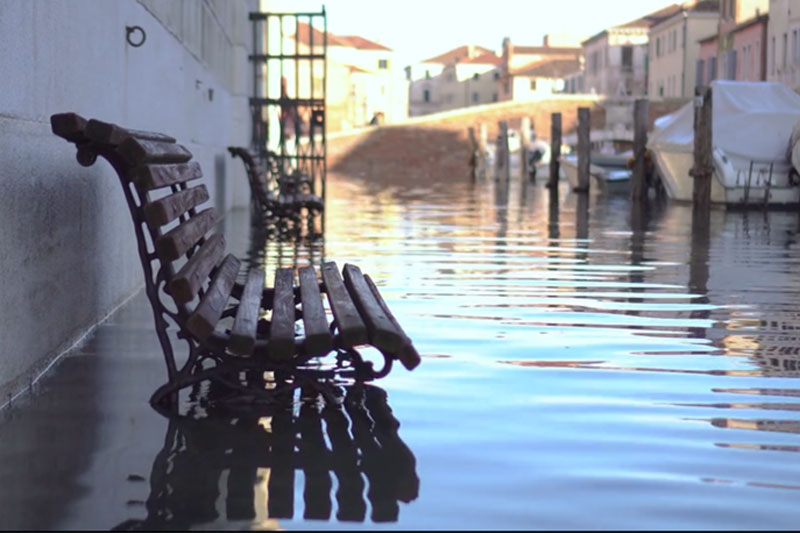
Businesses, homes and historic attractions were damaged. Among them, the Procuratie Vecchie, Doge’s Palace,the low-lying Piazza San Marco, and the adjoining Basilica.
Emerging from the disaster, targeted restorations revived their architectural splendour – leaving them more impressive than ever.
Did the 2019 devastation serve as a wake-up call to fortify the city’s defenses against nature’s growing threats?
Domínguez cautioned, “if tourists don’t sink one of the world’s most beautiful cities, the sea will.”
After nearly two decades of delays and controversy, the $8 billion MOSE (Modulo Sperimentale Elettromeccanico) system began operating in 2020. Seventy-eight colossal mobile floodgates installed at three inlets to the Venetian Lagoon now protect Venice from flooding.
However, studies found that repeated gate closures disrupt natural tides, degrading water quality and threatening marsh ecosystems. The national authorities are working on balancing flood protection with long-term ecological health.
Is Venice Sinking?
Every year, Venice sinks up to two millimetres while the sea rises about five millimetres.
Human activities including decades of over-pumping groundwater accelerated the city’s descent into the sea.
Giuseppe Gambolati, a retired professor at the University of Padua first proposed a bold fix. Pump water back into deep aquifers beneath the lagoon to raise the city. Today, Associate Professor Pietro Teatini, a colleague of Gambolati keeps that dream alive, working to make it a reality.
Dr. Georg Umigiesser of the CNR Institute of Marine Science (ISMAR) offered his perspective in an interview with DW. “This method could let us regain up to 30 cm, that’s almost as much as we lost over the last 120 years,” he said.
Giovanni Zarotti, the MOSE technical director told The Guardian the city must be reimagined, with less reliance on tourism, which he sees as a threat equal to rising waters.
How Long Can Venice Remain Above the Rising Tide?
Venice has always thrived between land and water, history and change. After returning decades later, I realized that the greatest threat may not only be the rising tide.
Travellers come to Venice not only for its enduring charm and architecture. They seek the traditions and daily rhythms that give the city its soul.
Its future depends on embracing sustainable tourism and climate action, and protecting Venetian traditions and the communities that sustain them. The city is more than a tourist destination—it is a living UNESCO treasure worth preserving.