






























Lest we forget: walking Juno Beach through the words of a D-Day veteran and a grieving mother, honouring those who made the ultimate sacrifice.
An hour north of Caen in France, a biting coastal wind hit as soon as we stepped off the bus at Courseulles-sur-Mer.
Inside the town’s popular bakery, the smell of rich butter and freshly brewed coffee offered a fleeting sense of warmth. Locals came and went, picking up breakfast and their daily supply of baguettes.
A queue spilled out the door of Maison Trihan as we stood clutching our hot chocolates and flaky croissants. Then an older man turned to us and spoke in English. “What brings you here?”
“We came to pay our respects,” we said. “To honour those who sacrificed their lives.”
The man held his gaze and nodded in quiet appreciation. For a moment, we shared a profound sense of respect and remembrance for the fallen.
As we made our way to Juno Beach Centre, scarred stone walls and commemorative plaques along the scenic town held quiet reminders of the war.
Juno Beach Centre: Standing in Silent Sentinel
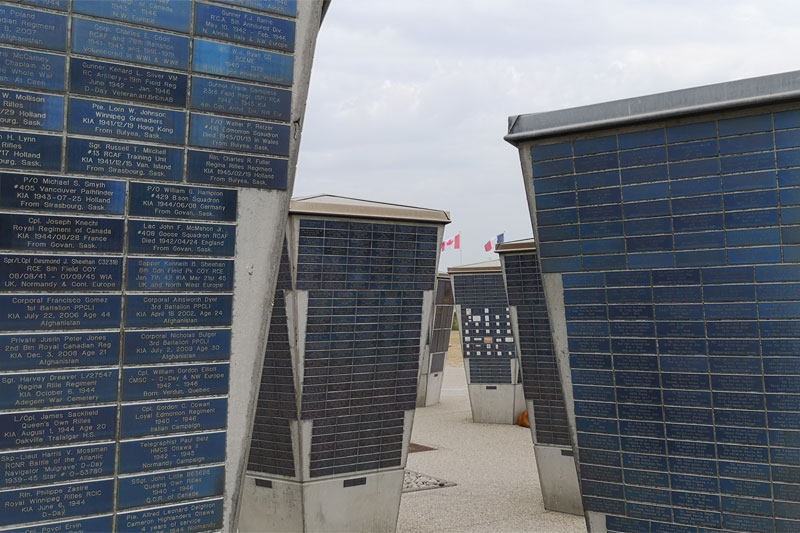
At the Centre entrance, commemorative bricks bore the names of over 12,000 service personnels lost in World War II.
Opened in 2003, Canada’s Second World War Museum and cultural centre honours the 45,000 Canadians who lost their lives during the War. The Battle of Normandy claimed 5,500 Canadian lives, including 359 on D-Day (June 6, 1944) alone.
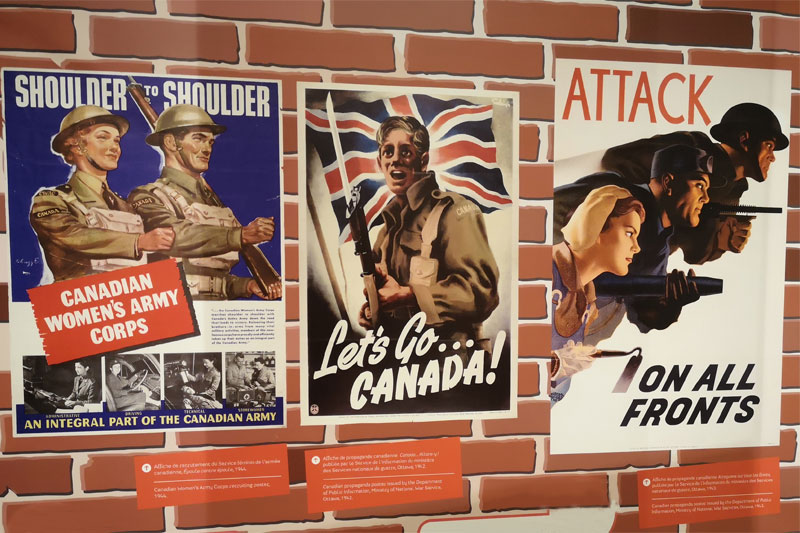
Inside the Centre, personal letters, photographs, interactive modules and wartime artifacts brought their stories to life. Together, they turned the staggering scale of D-Day into deeply personal accounts of courage, survival and loss.
As we emerged from the exhibits, the morning sun began to break through, illuminating the peaceful Normandy countryside. Yet we saw it through different lens. These rolling pastures and beaches had witnessed one of history’s defining battles.
We soon found ourselves inside the dark, concrete German bunkers. Luc, our student guide brought the stark grey walls to life. He recounted the fierce fighting and unyielding German defense from these fortified positions.
Then, we descended to the beach itself, standing on the very sand where the first waves of Canadian troops landed 82 years ago. We could only imagine the relentless gunfire, deafening explosions as the once-pristine water turned crimson with blood.
Memories of D-Day and Ultimate Sacrifice
Nearby, a Juno Park panel captured that exact terror in the words of Sapper (engineer) Ralph Spencer from Chilliwack, British Columbia.
Spencer served with the 6th Field Company, Regina Rifles. He recounted his harrowing landing on Nan Green on June 6, 1944.
“My job was to place any explosive GW charge on any gun position giving us trouble. I felt a bullet strike in my left leg and I stumbled for a second almost waist deep in the water. This moment of hesitation saved my life.”
“Another burst of MG fire took the foreshock off my rifle and passed through the front of my battledress blouse, at the same time letting the air out of my lifebelt.”
“My ammo pouch was chewed up, destroying some chocolate bars and cigarettes. The hand grenades remained intact. Thankfully my explosives were not hit!”
“I did not last long that D-Day but I will never forget my baptism of fire. I am sure that those who were there don’t need reminding; but perhaps post-war Canadians maybe need to know more about it.”
Spencer survived that day though thousands of others did not. Out of the brutality of war, however, a quiet solidarity arose.
Preserved at the Centre, a letter from Mrs. A. E. White of Guilbert Plains, Manitoba captured that bond when she wrote to Louis Mériel, the Mayor of Courseulles-sur-Mer, shortly after the war.
“I have my two youngest sons laying in Bény-sur-Mer cemetery and would feel it a great honour to a widowed mother if some kind hand in a far-off land would lay a flower on their graves for me, it is of great comfort to know that they fought together, died together and are buried side my side.”
Liberation and Remembering the Fallen
Storming through rough seas and fierce resistance, Canadian forces achieved the deepest inland advance of any Allied division on D-Day.
A heroic breakthrough that breached the Atlantic Wall and paved the way for the liberation of Europe.
Lest we forget, the bravery and sheer perseverance of these young Canadians remain a powerful reminder of their sacrifices.
It speaks to the heavy toll borne by all who served, the grief of those left behind, and the precious fragility of peace.
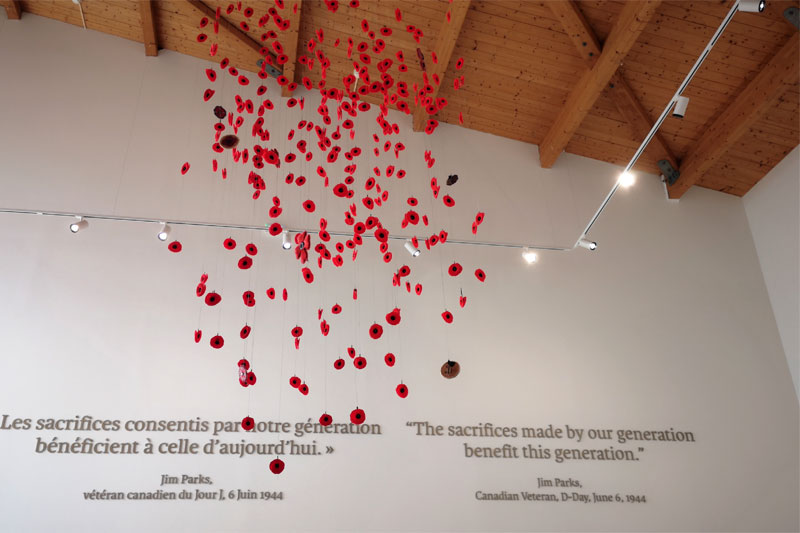
The price of freedom is measured not only in battles won, but also in lives changed forever.
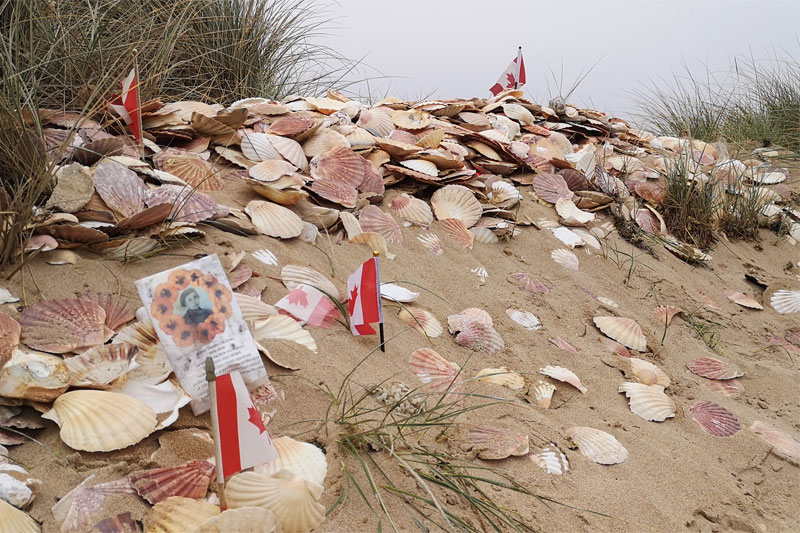
Along the stretch of Juno beach, a small mound built into the sand caught our eyes. Adorned with weathered shells and tiny, fluttering Canadian flags left by travellers before us, it stood as a moving, communal monument. A quiet testament to a legacy of shared gratitude.
We gathered a few smooth shells from the shoreline and add them to the stack. Standing back, we watched our small additions blend into the tribute.
The gesture is simple, but seeing our shells join the pieces left by strangers from all over the world makes the connection to the past feel entirely alive.
It is an unbroken chain of remembrance, proving that while the tide may wash away the sand, the world will never forget the price paid for its freedom.