


































Seat reservation made simple! Secure your Interrail seat with five essential checks for smooth, stress-free train travel across Europe.
You board the train with your rail pass, claim a window seat and settle in with a steaming cup of hot chocolate. The train pulls away, and the countryside begins to slips past.
Then a fellow passenger stops beside you.
“Excuse me. That’s my seat.”
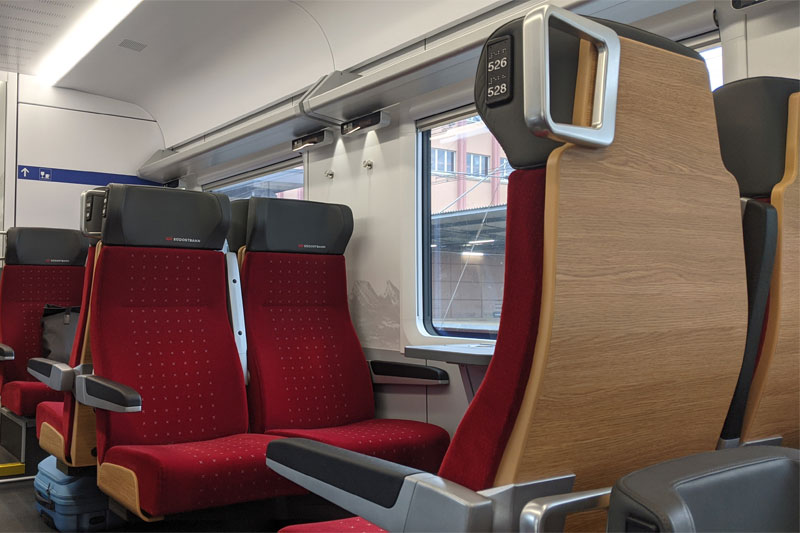
You glance at your rail pass. Everything seems in order. Then the passenger shows you a separate reservation ticket with your train, coach and seat number printed on it.
You’ve just discovered one of the easiest mistakes to make with an Interrail Pass.
Having A Rail Pass Doesn’t Always Mean You Have A Seat
Knowing when and how to book a reservation can keep a simple train journey from becoming a last-minute hassle.
What Is a Train Reservation?
- Your Interrail Pass covers eligible travel but does not always guarantee a seat.
- When required, a separate reservation secures a seat on a specific train and departure.
- Reservations help operators manage limited capacity on busy or premium services.
-
A seat reservation reserves your seat, not your luggage space. Rail travel generally does not include a separate baggage allowance like air travel. Check the train operator’s luggage rules before travelling.
When Are Reservations Required?
- Reservations are most common on high-speed, international and overnight trains.
- Trains in France, Italy and Spain often require seat reservations.
- Eurostar services, for example, can sell out quickly during busy periods and on high-demand international route, such as the Amsterdam-to-London services.
- Most overnight trains require pre-booked sleeper/couchette or a seat.
When Are Reservations Typically Not Needed?
- Regional and local trains often offer greater flexibility than reservation-required high-speed services, although journeys may take longer.
- Use Interrail’s journey filters to find trains that do not require reservations.
- Even reservation-free trains can become crowded during peak periods, so be prepared to stand.
Five Things to Check Before Making Your Seat Reservation
- Does your train require a reservation?
- Is there a convenient reservation-free alternative? If so, can you adjust your travel time?
- Does your pass cover the entire route?
- Are there different sections that require separate coverage?
- What happens if you need to change your plans?
One Train, Two Ticketing Rules
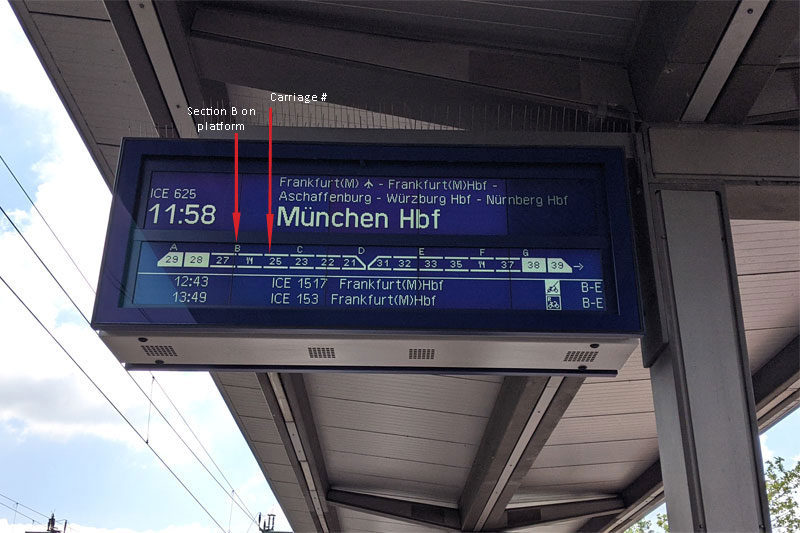
- Rail pass travel can sometimes work differently from a regular train ticket.
- The Rail Planner app may show your route as one continuous journey, even when different ticketing rules apply to different sections of the same journey on the same Travel Day.
- Example: A direct train from Tours to Caen via Le Mans requires two journey entries even though you stay aboard on the same train. First entry, Tours to Le Mans and the second, Le Mans to Caen.
Related: Don’t Buy a Rail Pass Until You Do the Math – Comparison Worksheet
How to Reserve Your Seat
- Start with the official Interrail timetable or Rail Planner app. Search for your route and check the train’s reservation requirements.
- Depending on the train, you can book through Interrail, the railway operator, a station ticket office, or Rail Europe.
- Compare the total cost before booking, as fees vary by provider. As of now, Interrail charges a €2 booking fee per traveller, per train, in addition to the seat reservation cost. For example, if your journey from Point A to Point B requires reservations on three trains, you would pay €6 in Eurail booking fees per traveller, in addition to reservation fees. Booking fees can add up quickly when reserving multiple journeys or travelling with family.
- Reserving directly at a station ticket office or with railway operators such as DB, Nederlandse Spoorwegen, ÖBB and SBB may avoid these fees. ÖBB also waive booking fees for Italian trains like the Frecciarossa.
- Check the refund and exchange conditions before booking. Most Interrail seat reservations are non-refundable. Booking fees are non-refundable.
- Reserve popular trains early, particularly between June and September and on weekends and holidays. High-speed and overnight trains may open reservations months in advance, and pass-holder inventory can fill quickly.
Avoid These Common Reservation Mistakes
- Book early, as passholder seats may sell out even when tickets are still available because trains limit the number of seats allocated to passholders.
- Do not assume your pass automatically includes every train.
- Do not pay for a reservation when a suitable reservation-free alternative is available.
- A reservation does not replace your rail pass; when both are required, you need both to travel.
Know the rules before you board to avoid surprises, stay within your budget, and save money.
Posted: August 14, 2026 | Updated: September 09, 2026